
Learn what deep linking is, how it works on iOS and Android, and why deep links can increase app downloads, activation, and mobile app growth.
If you are trying to grow an app, getting users to click is only half the job. The real challenge starts after the click. Many app marketers send traffic to a homepage, a generic app store page, or a broad landing page that forces users to search again, tap again, and think again. Every extra step reduces conversions. This is where deep linking becomes one of the most important tools in mobile growth.
Deep linking helps you send users to a specific destination inside an app instead of sending them to a generic starting point. It creates a smoother path between the user’s intent and the exact screen, product, offer, article, feature, or action they want. When used correctly, deep links can improve user experience, increase app downloads, support re-engagement, and strengthen the performance of paid ads, email campaigns, social media posts, QR codes, and app install journeys.
For app teams focused on user acquisition and activation, deep linking is not a technical extra. It is a growth infrastructure layer.
What Is Deep Linking?
Deep linking is a method that sends a user directly to a specific page or screen inside a mobile app, rather than just opening the app’s homepage or listing page.
For example, instead of sending a user to the main screen of a shopping app, a deep link can send them directly to a product page. Instead of opening a food delivery app at the default screen, a deep link can open a specific restaurant, category, or offer. Instead of making a user search again after clicking, deep linking connects the click to the intended destination.
This matters because user intent is usually specific. A person clicking an ad for discounted sneakers wants to see the sneakers, not the app’s main navigation. A person scanning a QR code for a clinic booking app wants the booking page, not a generic welcome screen. A person tapping a referral link for a music app wants the playlist, artist, or episode they were promised.
Deep linking reduces friction. Less friction usually means better conversion.
How Deep Linking Works
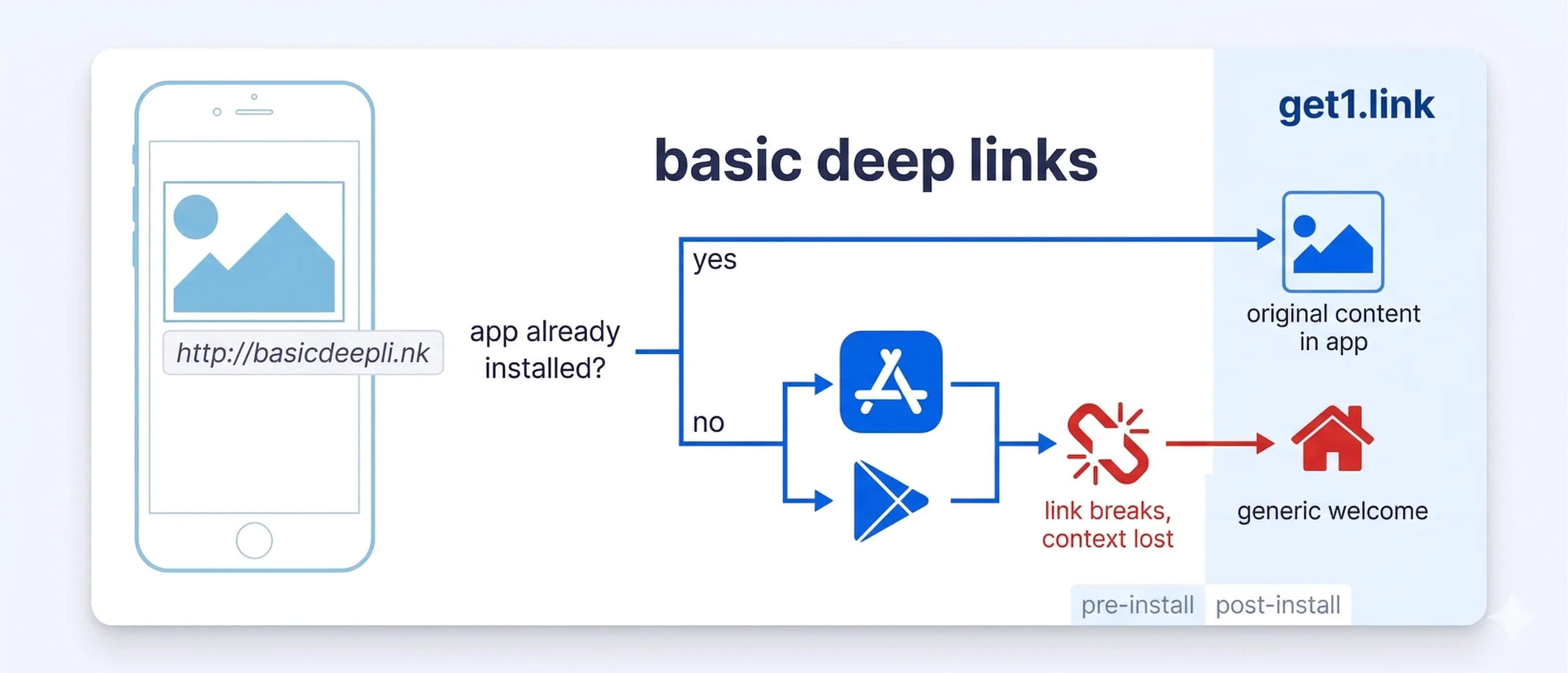
At a basic level, a deep link is a URL or app URI that points to a specific location inside the app. When a user clicks that link, the system attempts to open the matching app screen.
The flow depends on whether the app is already installed.
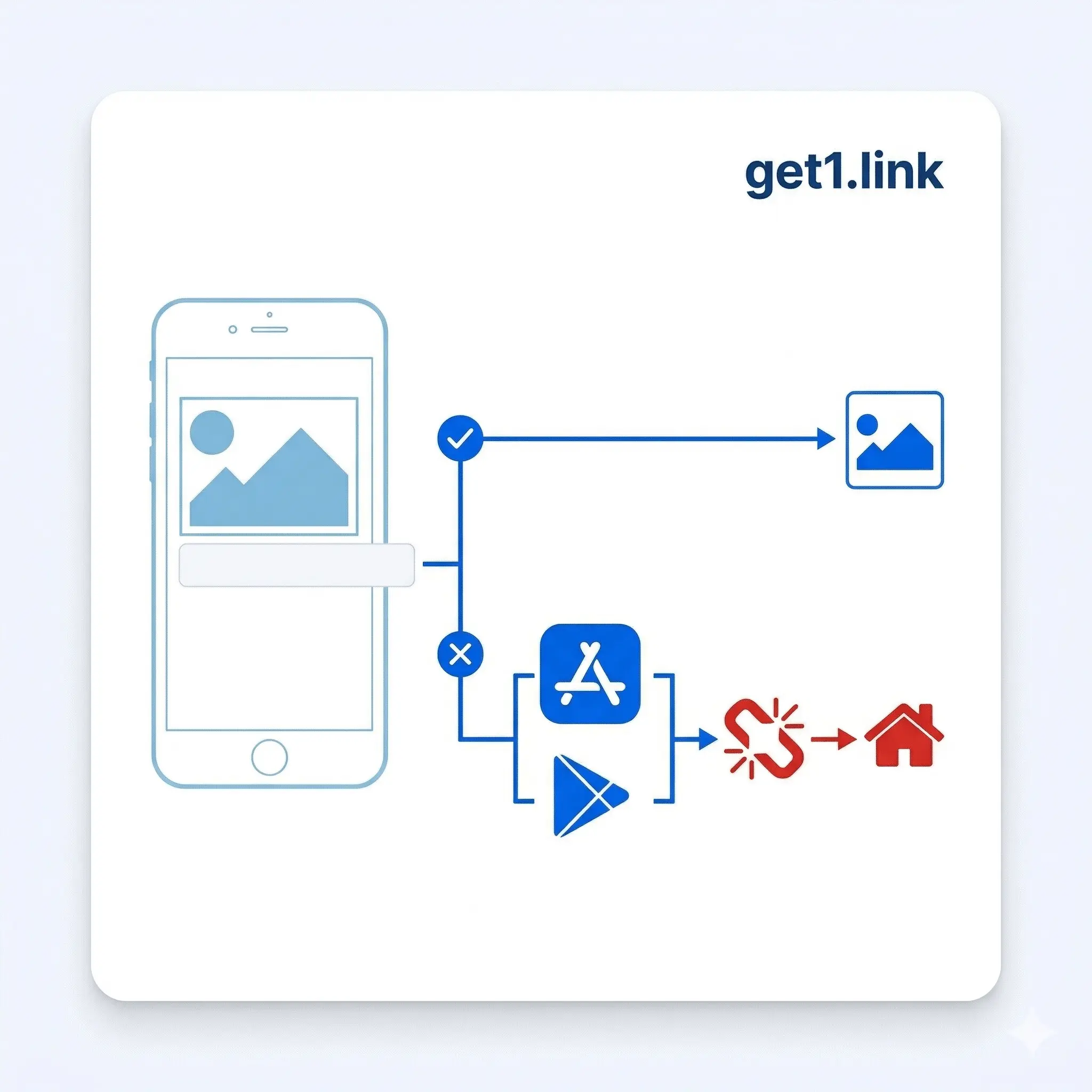
If the app is installed, the deep link can open the exact screen inside the app. If the app is not installed, the system may send the user to the App Store or Google Play first. More advanced setups can preserve the intended destination so that after installation, the user still lands on the right screen. That experience is often associated with deferred deep linking.
This is why deep linking is highly valuable for app growth. It supports both existing users and new users. Existing users get a faster path. New users can be guided toward installation with stronger continuity between pre-install intent and post-install action.
Types of Deep Links
Deep linking is often discussed as one concept, but in practice there are multiple types.
Basic Deep Links
Basic deep links work when the app is already installed. They take the user straight to a specific in-app destination. They are useful for re-engagement campaigns, email links, push notifications, in-app cross-promotion, and internal app ecosystems.
Deferred Deep Links
Deferred deep links are designed for users who do not yet have the app installed. The user first goes to the app store, installs the app, and then ideally continues to the intended content after installation. This is highly valuable for user acquisition campaigns because it reduces disconnect between the ad click and the final in-app experience.
Universal Links and App Links
On iOS, universal links are web links associated with an app so they can open the app when installed. On Android, the equivalent concept is app links. These are often preferred because they are more reliable and more user-friendly than older custom URI schemes.
Why Deep Linking Increases App Downloads
Deep linking does not magically create demand. It increases app downloads by improving conversion efficiency around existing demand. That distinction matters.
If a user is already interested, deep linking helps prevent drop-off. If a user clicks because they want something specific, deep linking keeps the path aligned with that intent. When this happens across paid campaigns, content marketing, influencer placements, referral programs, SMS, email, QR code scans, and app install pages, the compounding effect can be significant.
Here is why deep linking supports higher app download performance.
Better Intent Matching
Users are more likely to install an app when the experience feels relevant. A generic destination weakens relevance. A specific destination strengthens it. Deep linking keeps the promise of the click intact.
Lower Friction
Every extra step hurts conversion. If a user has to search again after installation, many will abandon the process. Deep linking minimizes the number of actions required to reach value.
Stronger Paid Campaign Performance
Paid acquisition depends heavily on post-click experience. If the landing flow is weak, media spend becomes less efficient. Deep linking improves the connection between ad creative, call to action, install flow, and in-app destination.
Higher Activation Rates
Getting the install is not enough. The user needs to reach a meaningful first experience quickly. Deep linking supports activation by taking the user closer to the moment of value.
More Effective Retargeting and Re-Engagement
Many campaigns are not about first-time acquisition only. Deep linking helps bring dormant users back to exact products, offers, content, or actions, improving reactivation performance.
Deep Linking Examples for App Growth
Deep linking can support many app categories and use cases.
An e-commerce app can deep link users from an ad directly to a discounted product page. A food delivery app can deep link to a restaurant, meal offer, or coupon screen. A fintech app can deep link to account setup, card activation, or referral rewards. A health app can deep link to a booking flow, educational article, or treatment reminder screen. A media app can deep link to a playlist, podcast episode, or live event stream. A travel app can deep link to a hotel listing, destination guide, or checkout page.
In each case, the growth logic is similar. The user arrives closer to the desired action. Less wasted motion means stronger conversion potential.
Deep Linking and App Store Conversion Strategy
Many teams think about app growth as separate channels: App Store Optimization, paid media, SEO, email, social, QR codes, and partnerships. In reality, deep linking works best when it connects these channels.
For example, a smart app link can detect the user’s device and route them to the right destination. An iPhone user can go to the App Store. An Android user can go to Google Play. If the user already has the app, they can be sent directly into the app experience. This creates a cleaner user journey across devices and platforms.
That is why deep linking and smart app linking work so well together. Deep linking handles the destination logic. Smart app linking handles the routing logic. Together they reduce confusion, improve attribution opportunities, and create a better path to app download and app open.
Deep Linking for SEO and Organic Traffic
Deep linking is usually discussed in app marketing, but it also matters for SEO indirectly.
Organic search traffic often lands on web pages first. If those pages are paired with strong app install calls to action and intelligent routing, they can become effective app acquisition surfaces. A user may find a page through Google search, understand the value, and then move into the app with far less friction.
This is especially important for brands building SEO-driven app growth strategies. If your web content ranks for high-intent searches, and your app link flow is well designed, deep linking can help bridge the gap between search traffic and app installs.
For example, a user searching for a workout plan, food menu, appointment page, product catalog, event ticket, or playlist may first discover the content on the web. If the page then routes them intelligently into the app or app store while preserving intent, the probability of installation and activation can improve.
Common Problems Without Deep Linking
Without deep linking, many app campaigns lose momentum after the click.
The user taps an ad but lands on a generic app store page. They install the app, open it, and do not see the item they expected. They search manually, get distracted, or leave. In another case, a user with the app already installed taps a promotion but is sent to the mobile website instead of the exact in-app screen. In another, a QR code on printed material sends all users to one generic destination regardless of device type.
These are not minor UX flaws. They are growth leaks.
When installs are expensive, even small leaks become costly.
Deep Linking Best Practices
Deep linking is most effective when it is treated as part of a full conversion system rather than a one-off technical setup.
The destination should closely match the promise of the source. A product ad should open the product. A coupon should open the coupon. A referral should open the referral destination. The link logic should account for iOS and Android separately. The experience should be tested across installed and non-installed cases. Attribution should be measured where possible. The app destination should load cleanly and deliver immediate value.
The messaging around the link also matters. Clear call to action, clear expectations, and clean routing can make a major difference.
Deep Linking and QR Codes
QR codes become far more powerful when combined with smart app links and deep linking.
A restaurant can place a QR code on flyers that opens its loyalty app download page or a specific in-app offer. A retail brand can place QR codes in stores that open product details or promotions. A clinic can use QR codes for appointment booking, medication reminders, or educational resources inside an app. A media company can use QR codes to open a specific show, article, or episode.
Without deep linking, the QR code may only open a generic page. With deep linking, the QR code becomes a direct bridge to user intent.
Deep Linking vs Regular App Links
A regular app link often points only to the app store listing or homepage. That may be enough for broad promotion, but it is weaker for conversion-focused campaigns.
A deep link points to a specific in-app destination. It is much better suited for precise intent, campaign-level optimization, retargeting, and activation.
The difference is similar to sending someone to a mall versus taking them directly to the exact store and product shelf they asked for.
Why This Matters for get1.link
If you are promoting an app across channels, you do not want different links for iPhone users, Android users, and desktop visitors. You do not want campaign traffic going to the wrong store. You do not want QR code scans leading to confusing flows. And you do not want strong intent wasted on generic destinations.
A smart app link platform helps centralize this logic. You create one clean link, connect your iOS App Store and Google Play destinations, and make distribution easier across web pages, social bios, ad campaigns, email, SMS, and QR codes. When deep linking is part of that setup, the link becomes much more than a redirect. It becomes a conversion path.
That is where app growth becomes more systematic.
Final Thoughts
Deep linking is one of the clearest ways to improve the path from click to install to activation. It helps align user intent with destination, reduces friction, improves campaign relevance, and supports stronger app growth outcomes across acquisition and re-engagement.
For teams serious about mobile growth, deep linking should not be treated as a technical side note. It should be part of the app distribution strategy, the user acquisition strategy, and the conversion strategy.
If your goal is more app downloads, better activation, cleaner routing, and stronger mobile growth performance, deep linking deserves attention.
And if you want to make that journey easier across iOS and Android with one smart app link, get1.link is exactly the kind of infrastructure that supports it.
Stop losing app downloads to broken links
One smart link automatically routes users to the correct app store based on their device. Boost your conversion instantly.
